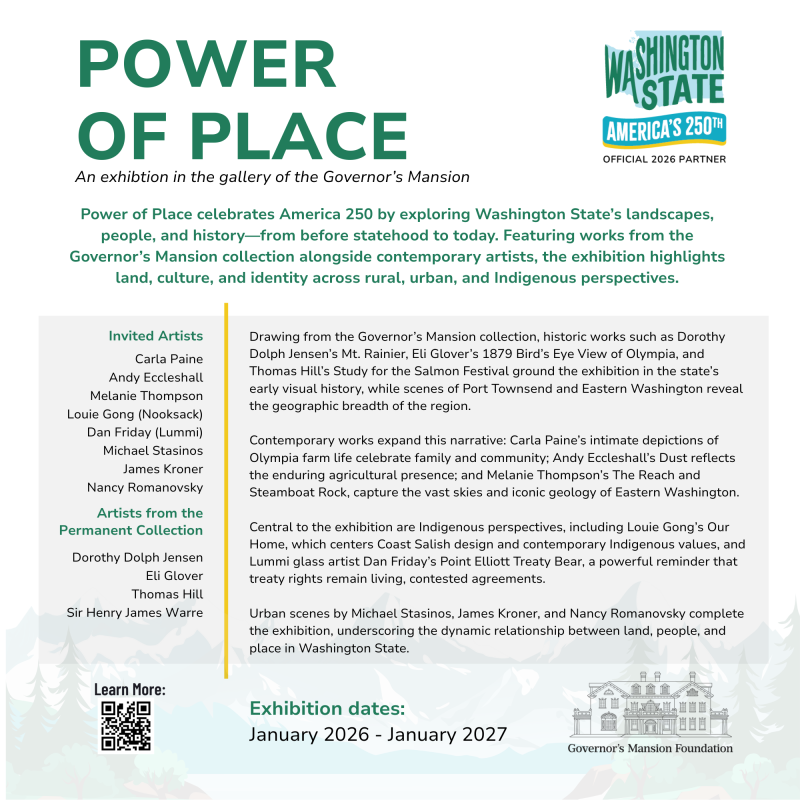
In celebration of America 250, Power of Place explores Washington State across time—before statehood, during its formation, and into the present—through landscapes, people, and lived experience. The exhibition reflects how place shapes identity, culture, and community, offering a layered portrait of the land we call home.
Drawing from the Governor’s Mansion collection, historic works ground the exhibition in Washington’s early visual history. Dorothy Dolph Jensen’s Mt. Rainier presents a striking vision of the state’s most iconic peak, while Eli Glover’s 1879 Bird’s Eye View of Olympia offers a rare glimpse into the capital’s formative years. Thomas Hill’s Study for the Salmon Festival speaks to the cultural and ecological importance of salmon, and scenes of Port Townsend, and Eastern Washington reveal the geographic breadth of the region.
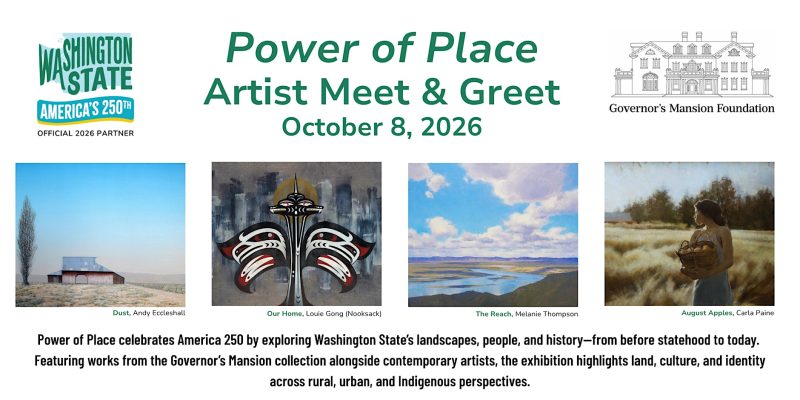
Contemporary works expand this narrative into the present day. Carla Paine’s intimate depictions of Olympia farm life celebrate family, labor, and community. Andy Eccleshall’s Dust reflects the enduring agricultural presence that continues to shape the land. Melanie Thompson’s The Reach captures the vast skies and iconic geology of Eastern Washington, emphasizing both scale and stillness.
Central to the exhibition are Indigenous perspectives that affirm this land’s deep history and living presence. Louie Gong’s Our Home centers Coast Salish design and contemporary Indigenous values, while Lummi glass artist Dan Friday’s Point Elliott Treaty Bear serves as a powerful reminder that treaty rights are living agreements—contested, enduring, and vital today.
Urban scenes by Michael Stasinos, James Kroner, and Nancy Romanovsky complete the exhibition, underscoring the dynamic relationship between land, people, and place in Washington State. Together, the works in Power of Place invite viewers to reflect on where we come from, where we are, and how place continues to shape our shared story.